

Agentic AI


What is a forward deployed engineer, and why do today's clinical trials need one?
What exactly is a forward deployed engineer?
If you have spent any time around AI and enterprise software this year, you have probably heard the term FDE, or forward deployed engineer. It sounds like a buzzword, but the role is why we’re able to solve real problems for our clinical trial clients in record time.
Restoring the American Biotechnology Edge
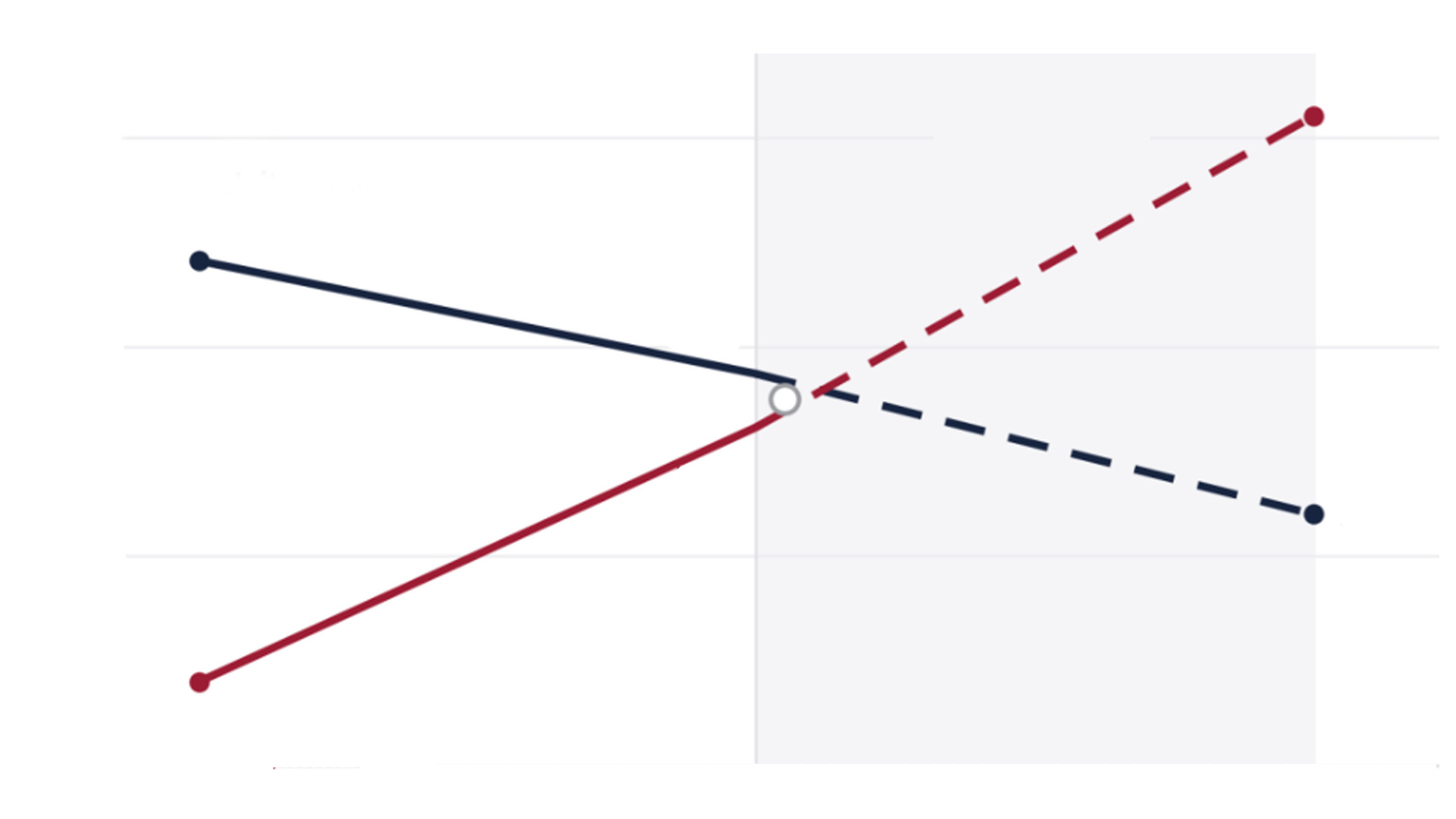
American biotechnology still leads in scientific innovation, but its advantage in turning science into medicine is eroding. Part 1 examines how slower, more expensive clinical development is shifting the competitive edge toward China, and what’s at stake for the future of U.S. biotech.


The Agentic AI Use Cases Already Transforming Clinical Trials
Industry leaders share real-world insights on using agentic AI to streamline clinical trials, accelerate decisions, and improve study execution.

The future economics of CROs
The ground has shifted for FSO (functional service outsourcing) and Unitized FSP (functional service providers) contract research organizations (CROs).
For years, the playbook for managing these types of CRO economics was familiar. Sponsors negotiated rates while CROs managed headcount and utilization around those rates .
That playbook still holds true today in theory. However, the conditions underneath it have shifted enough that it no longer produces the results it used to. Funding is tighter, sponsors are smaller and more price-sensitive, timelines are compressing ahead of the patent cliff, and AI has moved from an experiment on the roadmap to a baseline expectation in every RFP.
None of that is unique to any one segment of the market, but these pressures land differently for FSO and unitized FSP providers than they do for full-service CROs. That’s because these businesses are built on rate cards for CRAs, monitors, and other functional resources. When sponsors squeeze rates or expect more output per unit, there's no broader program fee to absorb the hit, here the unit economics are the business.
Rapid evolution: How agentic AI is redefining the role of the CRA
The way clinical trials are monitored is once again about to change.
This isn’t the first time clinical trial monitoring has evolved. Over the past three decades, the industry has undergone two major transformations in how monitoring is performed.
For much of the 1990s and early 2000s, monitoring relied on frequent on-site visits and extensive source data verification (SDV), with many studies aiming to verify nearly every data point. While rigorous in intent, this approach became increasingly difficult to sustain as trials grew larger and more complex, delivering diminishing returns relative to its cost and operational burden.
The industry responded by adopting risk-based monitoring (RBM) and centralized monitoring, shifting from exhaustive verification to a targeted, data-driven approach focused on the risks that mattered most. This evolution was reinforced by FDA and EMA guidance and ultimately codified in ICH E6(R2) in 2016.
While RBM improved efficiency and data quality, it did not fundamentally change how monitoring work was performed. CRAs still spent much of their time manually reviewing data, reconciling information across systems, documenting findings, and coordinating follow-up activities.
We are now entering a third shift. Unlike the first two, which primarily redistributed how monitoring effort was allocated, this one fundamentally changes the old rules on who and what is monitoring trial performance.


The right tool for the job: General AI vs clinical trial AI
The clinical trials industry is at an operational inflection point. Despite decades of process refinement, drug development timelines have continued to lengthen, and manual workflows still account for a significant portion of skilled operator time across key trial functions. The emergence of large language model-based AI platforms has introduced a new variable into this equation, with multiple vendors now positioning their technology as a solution to these structural inefficiencies.
Two categories of vendors appear frequently in sponsor and CRO evaluations. The first are general-purpose AI platforms, whose large language model capabilities have become some of the most widely benchmarked in the industry. The second are purpose-built clinical technology platforms with an established operational presence across decentralized and hybrid trial environments.
Both have made substantive investments in life sciences AI in 2026. Their approaches, however, differ significantly in architecture, regulatory readiness, and deployment scope. This analysis examines those differences to help sponsors and CROs assess which type of platform is better suited to their operational requirements.
What to look for in an AI clinical trial platform: A buyer's guide
Discover what to look for from artificial intelligence tools in the clinical trial market.
Which AI and agentic AI clinical trial vendors integrate best with existing systems?
Artificial intelligence is reshaping clinical trial operations in 2026. Sponsors and CROs are no longer evaluating standalone tools. They are choosing platforms that can connect with existing systems, automate complex workflows, and scale without disrupting ongoing studies. This guide breaks down the vendors best positioned to integrate with the clinical trial infrastructure you already have.
Key criteria for evaluating AI and agentic AI clinical trial vendors
Artificial Intelligence is rapidly transforming clinical research. From patient recruitment and protocol design to medical writing and data review, AI-powered solutions are becoming embedded across the clinical development lifecycle. More recently, the emergence of Agentic AI (systems capable of planning, reasoning, and executing multi-step workflows with varying degrees of autonomy) has generated significant excitement throughout the industry.
However, not all AI solutions are created equal. While many vendors promise dramatic improvements in efficiency and productivity, clinical trial organizations operate in one of the most highly regulated environments in the world. Success depends not only on technical performance but also on compliance, validation, governance, security, and trust.
As sponsors, CROs, and technology teams evaluate potential AI partners, they need a framework that extends beyond traditional software procurement criteria. The following considerations can help organizations assess both AI and Agentic AI vendors and identify solutions that are truly ready for clinical research.

Ontology 101: The semantic layer behind modern life sciences data
Clinical data speaks dozens of languages. Ontologies are the translator. Discover how life sciences teams are using semantic layers, AI agents, and MCP connectors to cut months of data harmonization down to days.

The AI Pilot Trap and How Clinical Trial Leaders Can Escape It
Most AI pilots in clinical trials fail to scale beyond proof of concept. Learn practical strategies for moving from isolated experiments to enterprise adoption.
The best AI tools for remote patient monitoring in clinical trials
AI-powered remote patient monitoring (RPM) is transforming clinical trials by enabling continuous data collection, real-time insights, and decentralized participation. This ecosystem spans wearables, AI analytics, data platforms, and decentralized clinical trial (DCT) infrastructure.
Additionally, agentic AI is fundamentally reshaping remote patient monitoring (RPM) in clinical trials by shifting it from passive data collection to proactive, autonomous decision support. Instead of simply aggregating data from wearables and patient-reported outcomes, agentic systems can continuously analyze multi-source trial data, identify emerging risks, and take action, such as prioritizing at-risk patients or sites, triggering alerts, or recommending interventions, without waiting for human input. This significantly reduces delays in detecting safety signals or protocol deviations. Just as importantly, agentic AI introduces workflow automation at scale by handling routine monitoring tasks, coordinating communications, and maintaining audit-ready reasoning trails. The result is a more adaptive and responsive RPM model where clinical teams move from manual oversight to strategic supervision, enabling faster, safer, and more efficient trials.
Below is a structured overview of the leading vendors, tools, and providers enabling AI-driven RPM in clinical research.

From three meetings to one removing bottlenecks with AI-enabled eCOA
Discover how AI-enabled eCOA and agentic workflows reduce clinical trial startup time, translation cycles, and meeting overhead—cutting eCOA build timelines from 16–20 weeks to under 8 weeks.