




%20(3).gif)
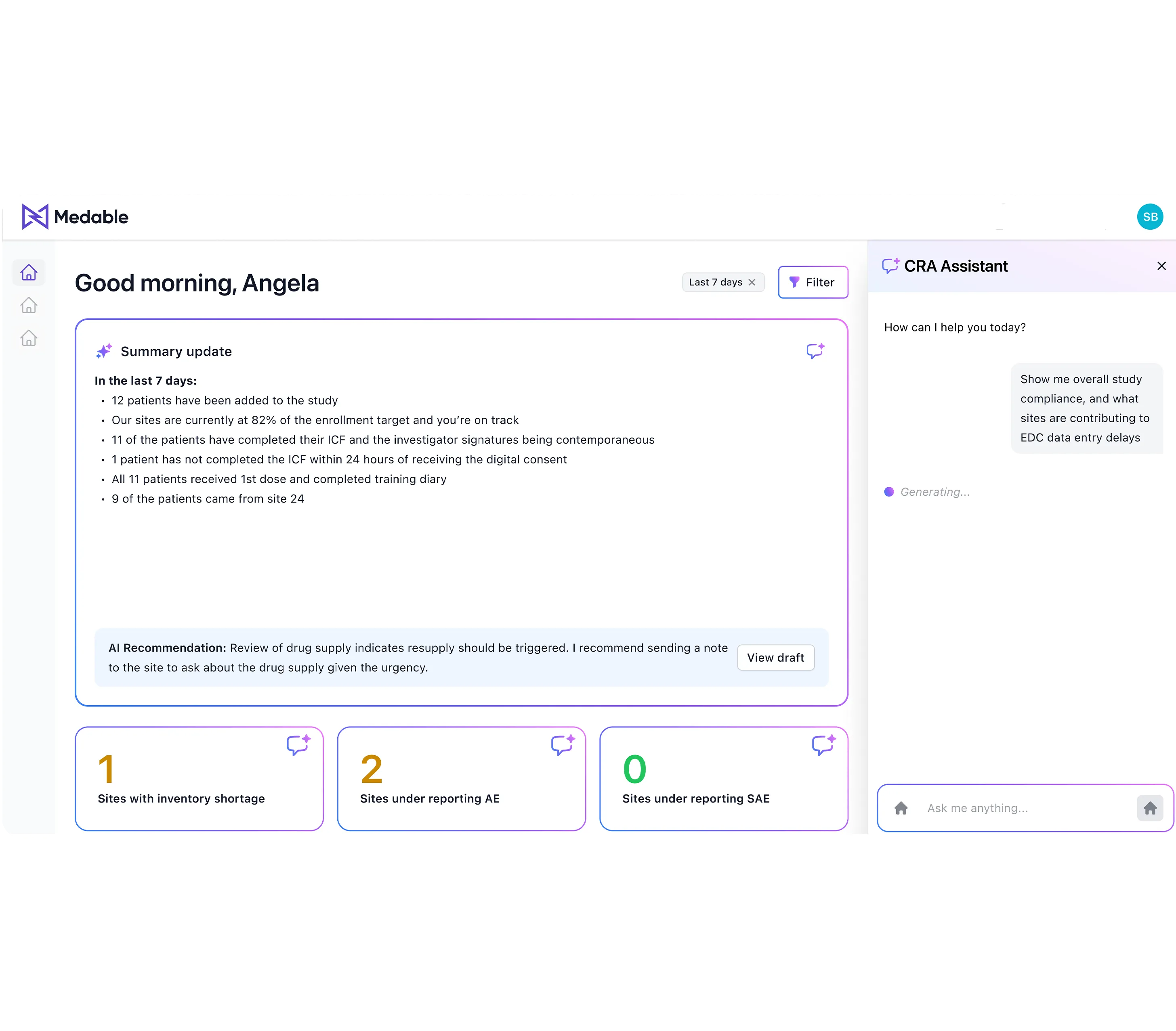



Agentic AI built for clinical development
The only agentic AI platform designed from the ground up for GxP-regulated environments. Model-agnostic. Human-in-the-loop. Connected to 15+ clinical and enterprise systems without replacing any of them.
- Full observability: Transparent, explainable, auditable decision trails
- Connected to your systems: Veeva, Oracle, Medidata, MS 365, Snowflake, and more
- GxP-ready by design: 21 CFR Part 11, Annex 11, ICH GCP, ALCOA+ audit trails
- Human-in-the-loop: Configurable oversight and escalation for every workflow
- Model-agnostic flexibility: Not locked into a single AI provider

Connects to the systems you already use
Over 30 secure, validated connectors to the systems you already run on, from Veeva, Oracle, and Medidata to Snowflake, BigQuery, and your collaboration stack. Your data stays where it lives. Medable just makes it work harder.

The first time I've seen agents in clinical ops this far advanced... you're really ahead of the pack.
Agentic capabilities across your entire trial
From monitoring to document management to study builds, agentic AI capabilities save you time and protect your data quality.
Platform features
Cloud agnostic API easily integrates data
Learn the fundamental approaches and best practices to create a seamless decentralized approach for clinical trials.
Notifications and reminders
Drive adherence and ensure patients stay engaged with built-in notifications and reminders.
Connectors
MCPs connect systems like EDC, TMF, IRT, and Teams so agents surface insights in Medable Agent Space and take action across your workflows and systems.
Ontology Layer
We normalize your data so agents can deliver insights and act instantly.
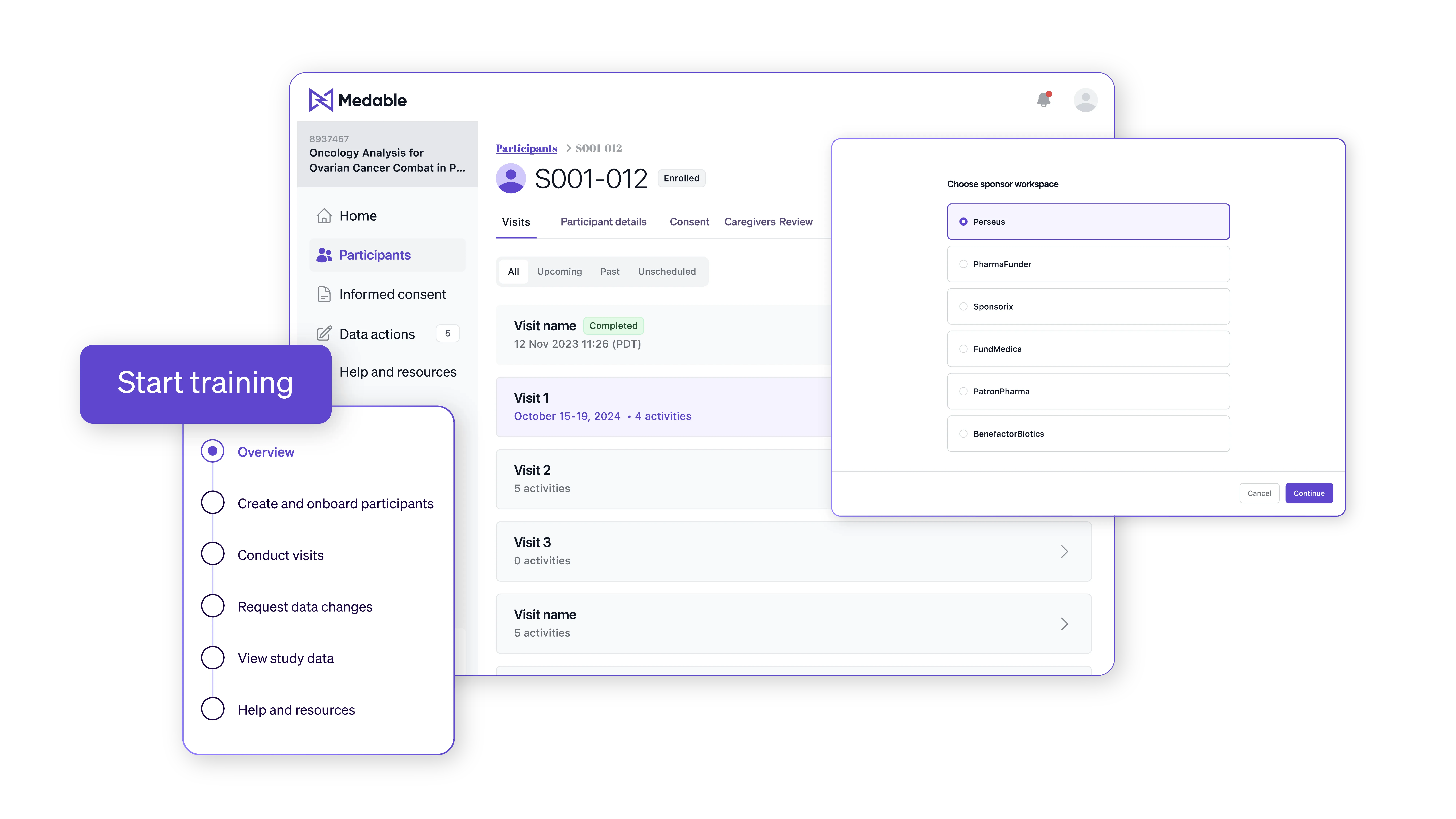
Multi-study Participant app
Patients can log into any new study with Medable’s participant app available on both Apple and Google app stores. Study teams mitigate app development and deployment time getting to FPI faster.
24/7 support
Medable offers 24/7 support for trial participants and sites with a 92% first call resolution ensures that help is only a click or call away.
Reporting and dashboards
Gain a quick snapshot of your trial’s status, or deep dive into the nuances of your sites and patients, now supported by Medable AI for faster analysis.
BYOD and Provisioned Devices
Give your sites and patients the convenience and comfort they deserve with BYOD, or our 99% on-time provisioned devices.
What our customers are saying
"Everything has been remarkably smooth, which is not always the case with eCOA vendors."
Top 10 Pharma
"When it comes to modern eCOA solutions Medable is leading the pack."
Director, eClinical Development, Top 5 CRO
"Medable offered robust early engagement and SME dialogue early in planning."
Director, DCT Sourcing, Top 5 Pharma
Platform accolades



.jpg)
Case Study
Learn how a top-10 global pharmaceutical company partnered with Medable to rapidly expand the number of oncology trials it could concurrently conduct.
The latest from Knowledge Centers

The age of agentic A complete guide on agents in clinical trials
A complete guide to AI agents in clinical trials, includingwhat they are, the infrastructure they need, where people stay in charge, and how to start. Discover how agentic AI is transforming clinical trials, and what's next. And, learn about ontologies, human-in-the-loop governance, build vs. buy, continuous validation/governance, and more.


What is a forward deployed engineer, and why do today's clinical trials need one?
What exactly is a forward deployed engineer?
If you have spent any time around AI and enterprise software this year, you have probably heard the term FDE, or forward deployed engineer. It sounds like a buzzword, but the role is why we’re able to solve real problems for our clinical trial clients in record time.

Rapid evolution: From digitized to agentified in two years
What does it mean to make meaningful change? More than a decade ago, Medable was founded on a simple premise: bringing treatments to patients faster. What we encountered when we first started was an industry relatively moving at a fixed pace, approving only about 50 new treatments a year on average. This average remained constant since the year 2000, no matter how much R&D investment and new technology got poured in.
As the decade progressed and we developed our data platform, eCOA, eConsent, and Televisit tools, a vision began to take shape. This vision was a series of ambitious goals that we believe we can achieve within our lifetimes: our 1:1:1 vision.
More importantly, we’ve made meaningful, measurable, tested progress towards radically redefining how fast clinical trials can move, and how they can be made easier for every stakeholder involved in them. This rapid evolution of Medable and the industry has been meaningful, with clients in top-10 pharma deploying our latest technologies, helping us take major steps towards accomplishing our 1:1:1 vision.