


A.I.

Key criteria for evaluating AI and agentic AI clinical trial vendors
Artificial Intelligence is rapidly transforming clinical research. From patient recruitment and protocol design to medical writing and data review, AI-powered solutions are becoming embedded across the clinical development lifecycle. More recently, the emergence of Agentic AI (systems capable of planning, reasoning, and executing multi-step workflows with varying degrees of autonomy) has generated significant excitement throughout the industry.
However, not all AI solutions are created equal. While many vendors promise dramatic improvements in efficiency and productivity, clinical trial organizations operate in one of the most highly regulated environments in the world. Success depends not only on technical performance but also on compliance, validation, governance, security, and trust.
As sponsors, CROs, and technology teams evaluate potential AI partners, they need a framework that extends beyond traditional software procurement criteria. The following considerations can help organizations assess both AI and Agentic AI vendors and identify solutions that are truly ready for clinical research.

From three meetings to one removing bottlenecks with AI-enabled eCOA
Discover how AI-enabled eCOA and agentic workflows reduce clinical trial startup time, translation cycles, and meeting overhead—cutting eCOA build timelines from 16–20 weeks to under 8 weeks.

The 1:1:1 vision: Reimagining clinical development
"The scarcest resource in clinical trials is the time of the highly qualified people running the clinical trials. We need to free up their time to bring more meaningful innovation to patients."
- David Hyman, Chief Medical Officer, Eli Lilly
Since the year 2000, the pace of drug approvals has remained stubbornly slow, with the FDA approving roughly 50 new treatments per year. This pace is in spite of massive increases in R&D investment. It’s well known that clinical trials take 10-12 years on average to complete all four phases. But what if clinical trials didn’t take weeks to start, months to enroll, and years to complete?

eCOA, AI, and Agentic AI: A practical overview and guide
Combining artificial intelligence (AI) and agentic AI with electronic Clinical Outcome Assessment (eCOA) systems fundamentally enhances how clinical trial data is collected, interpreted, and acted upon. At its core, eCOA captures structured data directly from patients, clinicians, or observers, such as symptom severity, quality of life, or functional outcomes. Modern platforms expand this further by supporting a full range of assessment types, including electronic patient-reported outcomes (ePRO), clinician-reported outcomes (eClinRO), observer-reported outcomes (eObsRO), and performance outcomes (ePerfO).

From the Congress floor to the dinner table: A Week in Washington that reminded me why this work matters
There's a particular kind of energy at the World Vaccine Congress that's hard to describe unless you've been in it. Hundreds of scientists, executives, policymakers, pharma leaders, CRO teams, and site networks, all in one convention centre, all sitting with the same fundamental tension. We know how to make vaccines that save lives. So why does getting them to patients still take so long?
I spent three days in Washington this week as part of the Medable team. Washington in late March meant that the cherry blossoms were just past their peak but still stunning, and catching them along the Tidal Basin between sessions was one of those small, unexpected gifts that a busy conference week doesn't always make room for.
For the conference, I came in with a clear intention. I wanted to reconnect with partners I respect, listen more than I talk, and have honest conversations about where this industry is and where it needs to go. What I didn't fully anticipate was how much the week would reinforce something I already believed but needed reminding of.
The urgency is real. And it's shared.

What happened at JPM 2026?
Each January, the J.P. Morgan Healthcare Conference sets the tone for the life sciences industry, serving as the year’s most influential gathering of biotech, pharma, investors, and dealmakers.
This year was no different.
Thus, we checked in with our conference attendees, booth visitors, and more to see what they thought were this year’s trend-setting takeaways.

How Agentic AI is transforming life sciences discovery and operations
The numbers are in, and they spell change for life sciences.
That’s because nearly three-quarters (73%) of global pharmaceutical organizations are actively planning, piloting, or deploying agentic AI initiatives.
This widespread means agentic AI is no longer a futuristic concept, but a present-day imperative for staying competitive and delivering life-changing medicines faster.
For those not yet in the know, agentic AI is a sophisticated form of AI designed not just to analyze data, but to act autonomously, plan, reason, and execute complex, multi-step tasks. This goes far beyond traditional automation. Instead, agentic AI is about creating intelligent systems that can drive innovation, accelerate drug development, and optimize operations like never before.
So, which companies are leading the charge, and how exactly are these intelligent agents reshaping the pharma landscape? Let's dive into the specifics.

Medable oncology solutions
Discover how Medable’s AI-powered oncology platform simplifies complex cancer trials by integrating eCOA, ePRO, and eConsent solutions—reducing trial time, improving patient retention, and enhancing data quality for faster, more efficient research.

Sponsors talk AI: Sanofi's take on the evolving role of AI in clinical trials
Artificial intelligence continues to move from experimentation to execution across the life sciences industry. On a recent episode of the AI in Business podcast, Matthew Peruhakal, Global Head of Data Architecture, Utilization, and AI Engineering at Sanofi, offered a deep look at how the pharmaceutical giant is integrating AI to transform clinical trials. From intelligent data workflows to proactive risk detection and regulatory alignment, Peruhakal described an organization reshaping its research and development operations around a new digital core.
His message was clear: AI cannot remain a side project. To make a meaningful impact, it must be embedded as a strategic capability that connects people, systems, and data across the enterprise.

Eliminate clinical trial white space with the right AI strategy
It has become clear that our industry has reachedthe limits of human-only clinical development. As clinical trials have become increasingly complex, the endeavors that people alone can perform are no longer sufficient to generate the momentum needed to address the growing burden of human disease. This has led to longer drug development timelines and significant delays for patients. One large are of lost time is “white space,” definied simply as unproductive time caused by manual, sequential processes and fragmented data systems. Thankfully, a solution lies in agentic AI and its abilities to perform series of tasks.

Rewriting the Future of Clinical Trials: AI, Agility, and the Portfolio-First Mandate
In a rapidly changing research landscape, leaders at Takeda, Novartis, Sanofi, Daiichi Sankyo, and Medable share firsthand insights into how artificial intelligence is reshaping clinical trial operations.
This exclusive whitepaper explores how forward-thinking organizations are reimagining trial design, execution, and scaling to meet the demands of speed, precision, and patient-centricity across their entire portfolio.
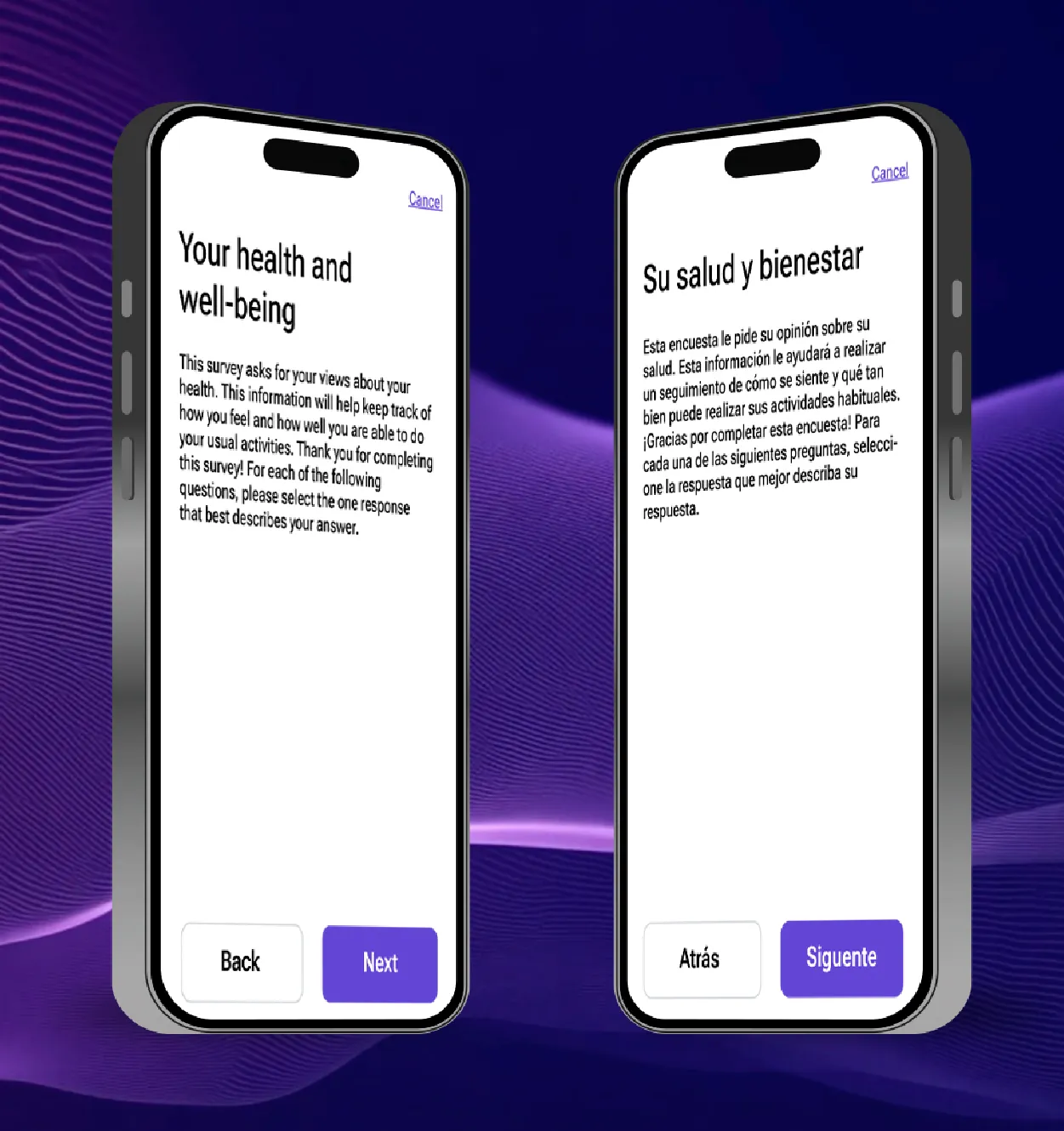
Case study: Removing translation bottlenecks with AI
Traditionally, translations and language migration create significant bottlenecks on the path to trial study go-live. The process is traditionally manual, linear, and resource intensive. To address these challenges, Medable partnered with Lionbridge, a leading translation services company to compare the status quo translation process against an AI-enabled approach powered by both companies’ proprietary new AI tools.

Back to basics: Agentic AI and how it’s impacting clinical trial research
Since the release of OpenAI’s ChatGPT in 2022, the buzz around artificial intelligence has been impossible to ignore. From advertisements during the SuperBowl to webinars and working groups, the impact of artificial intelligence has been felt in almost every sector of our world.
But, what if we told you the most transformative shift is still on the horizon?
When ChatGPT first released it changed the way the world, including clinical research, worked. Now NVIDIA, one of the most premier companies leading the way in the development of AI, has stated that they expect the development of Agentic AI, a new type of artificial intelligence to “change the way we work in ways that parallel how different work became with the arrival of the internet.”
This means agentic AI may have a much bigger impact than even generative AI did years back.
So, if you’re curious about agentic AI, read on as we delve into its nature, differentiate it from generative AI, and reveal its transformative role in clinical research."