

Knowledge Center

Restoring the American Biotechnology Edge
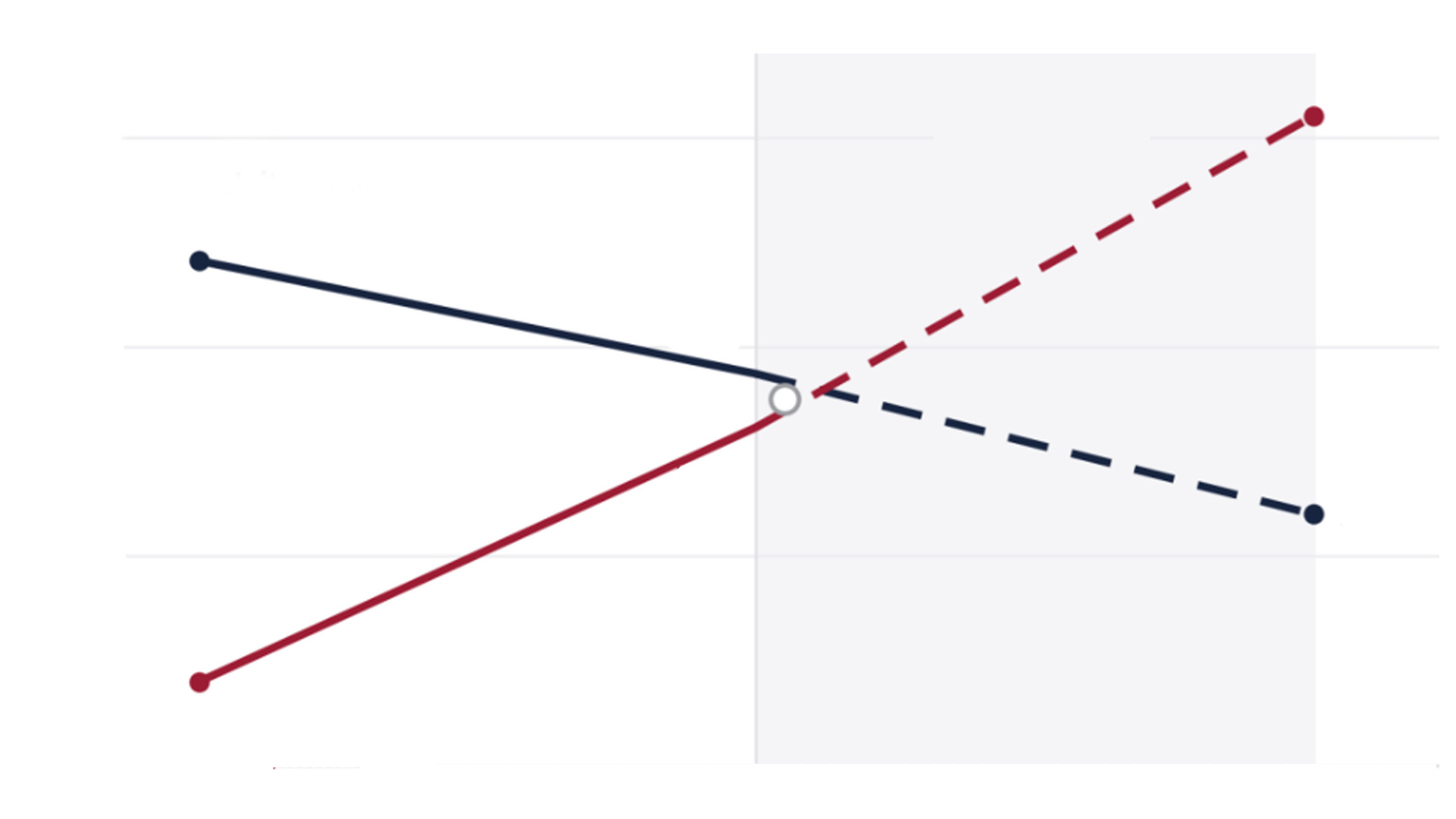
American biotechnology still leads in scientific innovation, but its advantage in turning science into medicine is eroding. Part 1 examines how slower, more expensive clinical development is shifting the competitive edge toward China, and what’s at stake for the future of U.S. biotech.
Latest Blogs

What is a forward deployed engineer, and why do today's clinical trials need one?
What exactly is a forward deployed engineer?
If you have spent any time around AI and enterprise software this year, you have probably heard the term FDE, or forward deployed engineer. It sounds like a buzzword, but the role is why we’re able to solve real problems for our clinical trial clients in record time.

Rapid evolution: From digitized to agentified in two years
What does it mean to make meaningful change? More than a decade ago, Medable was founded on a simple premise: bringing treatments to patients faster. What we encountered when we first started was an industry relatively moving at a fixed pace, approving only about 50 new treatments a year on average. This average remained constant since the year 2000, no matter how much R&D investment and new technology got poured in.
As the decade progressed and we developed our data platform, eCOA, eConsent, and Televisit tools, a vision began to take shape. This vision was a series of ambitious goals that we believe we can achieve within our lifetimes: our 1:1:1 vision.
More importantly, we’ve made meaningful, measurable, tested progress towards radically redefining how fast clinical trials can move, and how they can be made easier for every stakeholder involved in them. This rapid evolution of Medable and the industry has been meaningful, with clients in top-10 pharma deploying our latest technologies, helping us take major steps towards accomplishing our 1:1:1 vision.

The future economics of CROs
The ground has shifted for FSO (functional service outsourcing) and Unitized FSP (functional service providers) contract research organizations (CROs).
For years, the playbook for managing these types of CRO economics was familiar. Sponsors negotiated rates while CROs managed headcount and utilization around those rates .
That playbook still holds true today in theory. However, the conditions underneath it have shifted enough that it no longer produces the results it used to. Funding is tighter, sponsors are smaller and more price-sensitive, timelines are compressing ahead of the patent cliff, and AI has moved from an experiment on the roadmap to a baseline expectation in every RFP.
None of that is unique to any one segment of the market, but these pressures land differently for FSO and unitized FSP providers than they do for full-service CROs. That’s because these businesses are built on rate cards for CRAs, monitors, and other functional resources. When sponsors squeeze rates or expect more output per unit, there's no broader program fee to absorb the hit, here the unit economics are the business.
White papers, Case studies & reports


The age of agentic A complete guide on agents in clinical trials
A complete guide to AI agents in clinical trials, includingwhat they are, the infrastructure they need, where people stay in charge, and how to start. Discover how agentic AI is transforming clinical trials, and what's next. And, learn about ontologies, human-in-the-loop governance, build vs. buy, continuous validation/governance, and more.

Is data readiness slowing down AI in clinical trials? How agentic AI enables immediate impact
Clinical data doesn't need to be perfect for AI to deliver value. Learn a practical framework for deploying agentic AI in clinical trials today.

Ensuring clinical trial agent performance with continuous governance
According to seven different market research organizations, the “Agentic AI in clinical trials market” is expected to grow at a compound annual growth rate (CAGR) of anywhere between 12.5% to 43%. While the estimates obviously vary depending on who you ask, one thing remains crystal clear, agentic AI in clinical trials isn’t slowing down. As sponsors and CROs increasingly implement artificial intelligence, many organizations approaching clinical AI face real anxiety about the clinical trustworthiness of AI.
On-Demand Webinars


Clinical Innovations in AI: A Technology Showcase
Explore cutting-edge AI technologies transforming clinical trials, from intelligent protocol design to automated data management, in this virtual technology showcase featuring industry leaders in pharmaceutical innovation.

How leading pharma organizations are putting AI agents to work
Watch Medable for an interactive session on how agentic AI is moving beyond pilots to transform clinical operations.

The Agentic AI Use Cases Already Transforming Clinical Trials
Industry leaders share real-world insights on using agentic AI to streamline clinical trials, accelerate decisions, and improve study execution.
Scientific Research

Assessing the financial value of decentralized clinical trials
Deployment of remote and virtual clinical trial methods and technologies, referred to collectively as decentralized clinical trials (DCTs), represents a profound shift in clinical trial practice. To our knowledge, a comprehensive assessment of the financial net benefits of DCTs has not been conducted
Development of a mobile health app (TOGETHERCare) to reduce cancer care partner burden: Product design study
Research looking at mobile apps and how they may provide a meaningful access point for all stakeholders for symptom management.
Guides


eConsent regulations: What changed under FDA, ICH E6(R3), Part 11 and global regulations
Electronic informed consent, or eConsent, is no longer a novel approach to clinical research. Regulators around the world increasingly recognize electronic, remote and technology-enabled approaches to informed consent as part of modern clinical trial conduct.
But the regulatory environment has changed significantly.
The most important development is not a single new eConsent regulation. Instead, updates to Good Clinical Practice, electronic systems guidance and national clinical trial frameworks are changing how sponsors can design, document and manage informed consent.
ICH E6(R3) is central to that change. FDA issued E6(R3) as final guidance in September 2025, describing the revision as a modernization of GCP that embraces innovation in trial design, conduct and technology while emphasizing quality by design, participant protection and risk-based approaches. FDA subsequently withdrew its E6(R2) guidance in April 2026.
At the same time, regulatory developments in the United States, European Union, United Kingdom and Canada are providing clearer frameworks for electronic records, remote interactions and alternative ways of documenting consent.
For sponsors, CROs and clinical trial sites, the question is therefore changing. It is no longer simply, "Can informed consent be electronic?"
Increasingly, the question is: How can electronic informed consent be implemented in a way that protects participants, supports understanding, verifies identity where required, preserves reliable records and meets the requirements of every jurisdiction involved in a trial?

How to improve comprehension and data quality with eConsent
Informed consent is the first data point in every clinical trial, and one of the easiest to get wrong. Discover how multimedia consent, embedded comprehension checks, and smarter re-consent workflows help sponsors turn eConsent into a real data quality lever, not just a digital signature.

The right tool for the job: General AI vs clinical trial AI
The clinical trials industry is at an operational inflection point. Despite decades of process refinement, drug development timelines have continued to lengthen, and manual workflows still account for a significant portion of skilled operator time across key trial functions. The emergence of large language model-based AI platforms has introduced a new variable into this equation, with multiple vendors now positioning their technology as a solution to these structural inefficiencies.
Two categories of vendors appear frequently in sponsor and CRO evaluations. The first are general-purpose AI platforms, whose large language model capabilities have become some of the most widely benchmarked in the industry. The second are purpose-built clinical technology platforms with an established operational presence across decentralized and hybrid trial environments.
Both have made substantive investments in life sciences AI in 2026. Their approaches, however, differ significantly in architecture, regulatory readiness, and deployment scope. This analysis examines those differences to help sponsors and CROs assess which type of platform is better suited to their operational requirements.