




%20(3).gif)
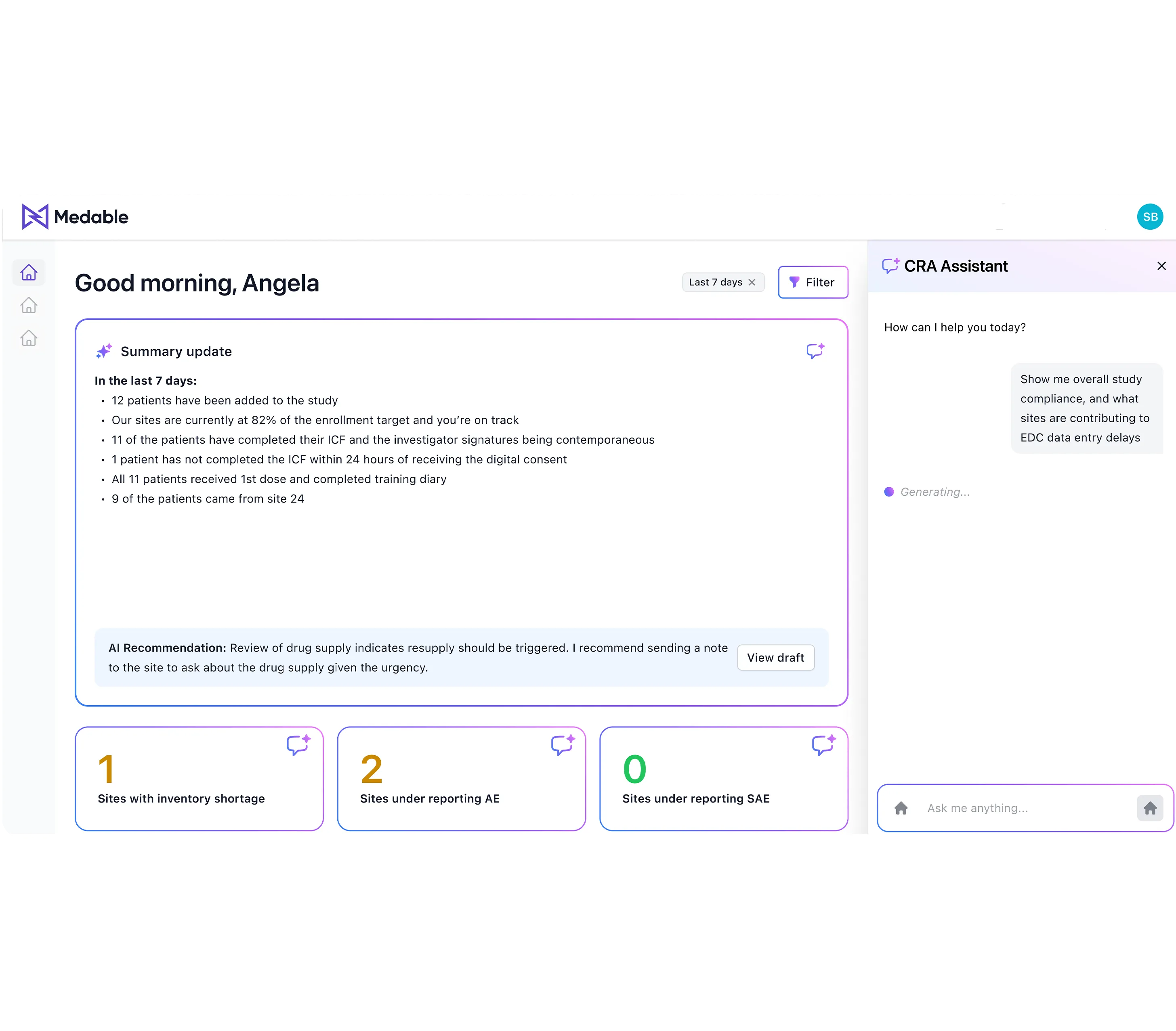



Agentic AI built for clinical development
The only agentic AI platform designed from the ground up for GxP-regulated environments. Model-agnostic. Human-in-the-loop. Connected to 15+ clinical and enterprise systems without replacing any of them.
- Full observability: Transparent, explainable, auditable decision trails
- Connected to your systems: Veeva, Oracle, Medidata, MS 365, Snowflake, and more
- GxP-ready by design: 21 CFR Part 11, Annex 11, ICH GCP, ALCOA+ audit trails
- Human-in-the-loop: Configurable oversight and escalation for every workflow
- Model-agnostic flexibility: Not locked into a single AI provider

Connects to the systems you already use
Over 30 secure, validated connectors to the systems you already run on, from Veeva, Oracle, and Medidata to Snowflake, BigQuery, and your collaboration stack. Your data stays where it lives. Medable just makes it work harder.

The first time I've seen agents in clinical ops this far advanced... you're really ahead of the pack.
Agentic capabilities across your entire trial
From monitoring to document management to study builds, agentic AI capabilities save you time and protect your data quality.
Platform features
Cloud agnostic API easily integrates data
Learn the fundamental approaches and best practices to create a seamless decentralized approach for clinical trials.
Notifications and reminders
Drive adherence and ensure patients stay engaged with built-in notifications and reminders.
Connectors
MCPs connect systems like EDC, TMF, IRT, and Teams so agents surface insights in Medable Agent Space and take action across your workflows and systems.
Ontology Layer
We normalize your data so agents can deliver insights and act instantly.
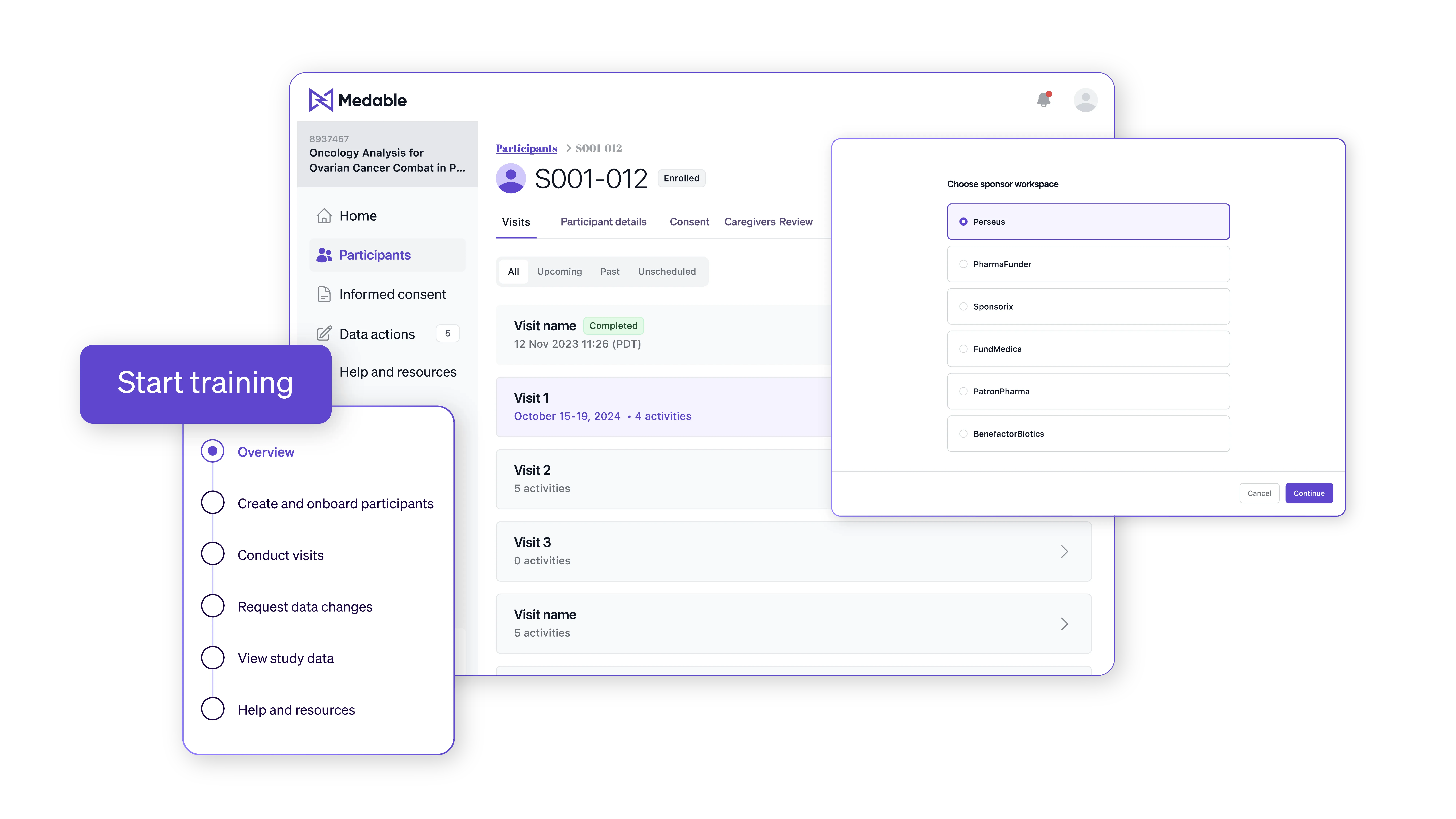
Multi-study Participant app
Patients can log into any new study with Medable’s participant app available on both Apple and Google app stores. Study teams mitigate app development and deployment time getting to FPI faster.
24/7 support
Medable offers 24/7 support for trial participants and sites with a 92% first call resolution ensures that help is only a click or call away.
Reporting and dashboards
Gain a quick snapshot of your trial’s status, or deep dive into the nuances of your sites and patients, now supported by Medable AI for faster analysis.
BYOD and Provisioned Devices
Give your sites and patients the convenience and comfort they deserve with BYOD, or our 99% on-time provisioned devices.
What our customers are saying
"Everything has been remarkably smooth, which is not always the case with eCOA vendors."
Top 10 Pharma
"When it comes to modern eCOA solutions Medable is leading the pack."
Director, eClinical Development, Top 5 CRO
"Medable offered robust early engagement and SME dialogue early in planning."
Director, DCT Sourcing, Top 5 Pharma
Platform accolades


.jpg)
Case Study
Learn how a top-10 global pharmaceutical company partnered with Medable to rapidly expand the number of oncology trials it could concurrently conduct.
The latest from Knowledge Centers


How to improve comprehension and data quality with eConsent
Informed consent is the first data point in every clinical trial, and one of the easiest to get wrong. Discover how multimedia consent, embedded comprehension checks, and smarter re-consent workflows help sponsors turn eConsent into a real data quality lever, not just a digital signature.

Ensuring clinical trial agent performance with continuous governance
According to seven different market research organizations, the “Agentic AI in clinical trials market” is expected to grow at a compound annual growth rate (CAGR) of anywhere between 12.5% to 43%. While the estimates obviously vary depending on who you ask, one thing remains crystal clear, agentic AI in clinical trials isn’t slowing down. As sponsors and CROs increasingly implement artificial intelligence, many organizations approaching clinical AI face real anxiety about the clinical trustworthiness of AI.

A results-focused look at cardiometabolic trials at Medable
With GLP-1 therapies reshaping the competitive landscape, sponsors need speed to first patient, portfolio consistency, and adherence that holds up over years, not weeks. See how five sponsors/CROs got there with Medable.