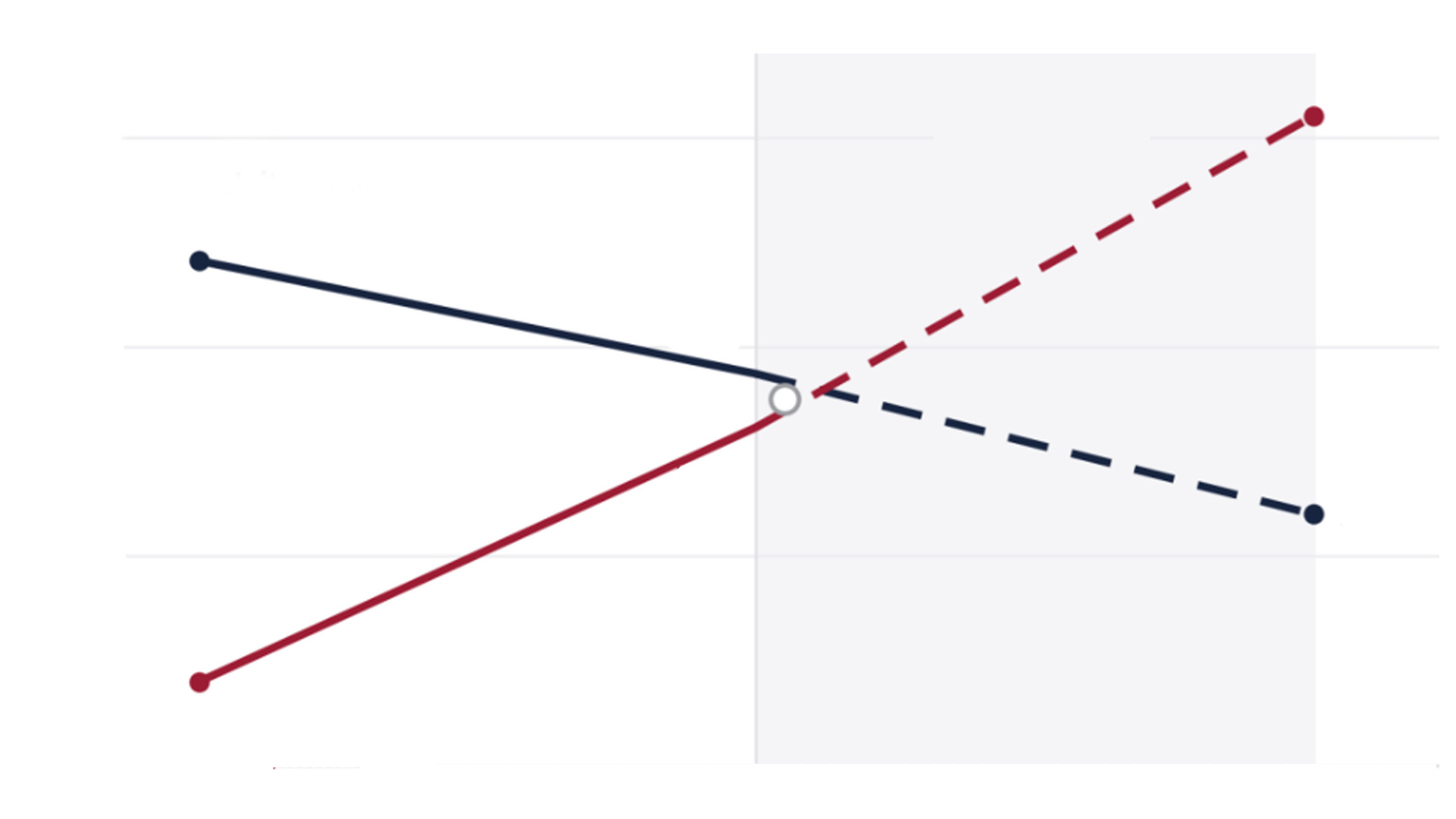
To say there’s movement within the agentic life sciences market would be an understatement. According to seven different market research organizations, the “Agentic AI in clinical trials market” is expected to grow at a compound annual growth rate (CAGR) of anywhere between 12.5% and 43%.
While many sponsors and CROs surveyed want agentic AI operating at some level within their clinical trials, almost none of them think they're ready for it. "Our systems don't talk to each other." "Our data is a mess." "We need a two-year foundation project before we can even think about agents." These aren't fringe concerns, they're the default assumptions in nearly every boardroom conversation about AI adoption.
Here's the problem. Those assumptions are very wrong, and they're costing sponsors real time. While teams wait for the "right" conditions to start, the gap between early movers and everyone else keeps widening. The truth is, readiness isn't a prerequisite for agentic AI, it's a byproduct of starting.
Below, we take on the myths that keep organizations stuck in planning mode, and the facts that show why the window to start is now, not after your data is perfectly clean and your stack is fully unified.
Myth #1: "We already have a clinical platform, so we can't use anything else."
Your existing clinical systems, EDC, CTMS, eTMF, are systems of record. They store your data, run your trials, and hold years of validated history and do not need to be replaced or altered.
Medable sits across your existing stack. Agent Studio and the data layer connect to your existing systems through purpose-built connectors (Model Context Protocol (MCP), reason across the data they generate, and enable agents to act on your systems behalf by querying enrollment figures, flagging risk signals, summarizing TMF completeness, and more without touching a single record.
Your EDC keeps running exactly as it does today and your CTMS doesn't change. What does change is what you can do with the data those systems already hold, because Medable connects the dots between them in real time.
This also addresses a concern that comes up in IT and procurement conversations. There is no migration project, no new system of record to manage, and no dependency on Medable as your primary data store as you retain full ownership of your data and your systems. Medable adds intelligence on top, and because it's model-agnostic, it adapts as the AI landscape evolves. This lets you build on infrastructure that works with whichever model performs best.
Additionally, this also gives you long-term flexibility on two fronts. On one hand, you get a single place to see the status of your entire portfolio and take action from there. On the other, you can swap systems and models in and out with ease as your needs change, without losing that unified view. It's a command center for intelligence and action, one that stays yours no matter how the underlying pieces evolve.
"We're not replacing your existing stack. We help you to operationalize and drive efficiencies across it. You can still use all your other systems, and we will continue to adapt and build as those things grow." —Luke Bates, Medable VP, Product Management
Myth #2: "Our data isn't ready for agentic AI. We need years to clean it up first."
This is the one myth that quietly kills AI initiatives before they start.
Teams often assume that because their data is inconsistent across systems, and different CROs use different definitions, that AI has to wait until the foundational data engineering work is done to normalize everything. In the past, that assumption was real as data readiness was a vendor-heavy, resource-intensive process. But thankfully, it's no longer accurate.
The underlying problem is real: the same concept means different things in different systems. A "patient" in one EDC is a "subject" in another CTMS. A "site" in one system is structured differently than a site record in another. When you're working with multiple CROs, each running studies in their own systems with their own data definitions, the inconsistency compounds fast.
Medable's clinical ontology layer solves this without a data transformation project. Rather than moving or cleaning data, it creates a semantic mapping, grounded in standards like CDISC, CDASH, and the Pistoia Alliance clinical development ontology, that allows agents to traverse disparate systems as though they share a common vocabulary. The data stays where it lives. The understanding travels with the agent.
Crucially, this mapping is built agentically. When a new data source is connected, the system explores it, identifies the relevant concepts, and proposes bindings to the ontology, surfacing a confidence score so human reviewers can accept, reject, or refine each mapping. What once required a team of data engineers and months of calendar time can now happen in weeks. Your data doesn't need to be perfect before you start. The process of connecting it makes it better.
What used to take years can now happen in weeks, and maybe even days. — Chief Customer Officer, Medable
For sponsors actively building a data catalog across their R&D organization before enabling AI, this reframes the sequencing entirely. You don't have to finish the data work before starting. The ontology layer is part of the data work, accelerating the catalog, surfacing inconsistencies, and enabling downstream AI use cases in parallel, not after.
Fact: Start with what you have, and grow from there
The most common hesitation in connector conversations, from security teams, IT governance, and legal, is about what the system can change.
The answer for a first deployment is simple, it’s nothing, as you can start with read-only permissions. Read-only connections to EDC, CTMS, and eTMF, alongside the communication platforms your team already uses, give agents enough to generate immediate, visible value without modifying a single record.
For a CRA operating in the field, start with read-only connections to EDC, CTMS, and eTMF. Enable write access for only their communication systems. This enables the agent to surface risk signals, summarize site performance, and recommend actions, without touching a single record in a source system. The value is immediate, and the risk surface is minimal.
From there, more access generates more value. A CRA agent with visibility into communication, EDC, and CTMS surfaces patterns no single-system tool can see. Add labs, imaging, and IRT, and it becomes a genuine operational intelligence layer. Eventually, with human-in-loop approval always in place, agents begin taking action, drafting queries, flagging deviations, updating task completions back into the source systems. Including the ones you already rely on.
The trust required for write access is earned through performance, not assumed upfront.
Fact: This only works with companies who already know clinical trials
Right now, sponsors and CROs are often presented with two options in our existing clinical trial AI market. On one side are fast-moving artificial intelligence companies who are racing to bring cutting-edge technology to clinical trials without the clinical context or lived experience of actually having built and run a trial themselves.
“Move fast and break things,” is the old adage of these tech first companies. As you already know, clinical trials are regulated in a way that absolutely nothing should ever “break.”
On the other side are the incumbents, enterprise-first "grandfathered" companies who understand the clinical process deeply, but are often slower to catch up to where the technology has already moved, leaving sponsors waiting for capabilities that competitors are shipping today.
Technically speaking, sponsors and CROs should evaluate only those organizations who are both clinically native, and AI native because of their inherent advantages. Only companies who are native at both can build AI solutions that actually fit clinical reality rather than forcing generic AI into healthcare workflows.
For example, consider Medable’s GxP governance framework. This is not a feature or layer built in, it is the architecture of the tool. Every agent action is logged with a complete audit trail, and human-in-the-loop controls are configurable by workflow type. Performance monitoring runs continuously, so sponsors can track not just whether an agent completed a task, but how accurately it did so and where it needed human correction.
Fact: Data residency and architecture must be federated by design
Another concern that often surfaces in enterprise conversations is data residency. Sponsors managing highly sensitive clinical data, patient records, trial endpoints, and regulatory submissions are rightfully cautious about any platform that touches, moves, or persists that data outside their control.
Medable's data layer is designed to be federated by default. When agents query connected systems, the queries are executed at the source. Data is pulled into memory for the duration of the task, then released. Nothing persists to disk unless explicitly configured. The ontological mappings and semantic layer persist on the platform while the underlying clinical data does not.
We also support sponsors who want to persist materialized views to power trend analysis, build longitudinal performance data, or feed a downstream medallion architecture. Persisted data is encrypted, tenant-isolated, and controlled entirely within the customer's configuration.
Single-tenant deployment is available to organizations with the most stringent data governance requirements, providing full environment isolation within Medable's cloud infrastructure. This means that there is no shared compute, no shared storage, and no data co-mingling with other customers.
Fact: The window to start is now, not after your data is ready
The vision Medable is working toward is a world where clinical development operates at 1:1:1– one day to start a study, one day to enroll, one year to complete. Against today's baseline of six months to start, a year or more to enroll, and three to four years to complete, that's a fundamental transformation in how quickly medicine reaches patients.
The sponsors who get there first won't be the ones who waited for a perfect data environment. They'll be the ones who started connecting their existing stack and let the ontology layer normalize the data as the work progressed. The advantage compounds. Every study run on an agentic foundation generates better data, better maps, better performance. The gap between early movers and late movers widens over time.
For sponsors and CROs on the fence about adopting agentic clinical trials, the Medable Agentic Accelerator Program (AAP) sequences activation in three stages (Sprint, Activation, Scale) so sponsors don't face a monolithic implementation project, and they start generating value from day one.
To learn more about this program, click here.